
Understanding Your Dog's Changing Behavior
Recognizing When New Habits Signal Something More
Dogs aren't always predictable. A dog who normally enjoys meeting new people might suddenly become hesitant around strangers. Another who has always been relaxed at home may begin barking more frequently, avoiding certain activities, or responding differently to familiar situations.
When behavior changes unexpectedly, it's easy to assume your dog is being stubborn or simply developing a bad habit. However, changes in behavior can have several explanations, and understanding what's happening is an important first step toward addressing the problem.
We encourage owners to pay attention to behavioral changes rather than focusing exclusively on the behavior they want to stop.
Behavior Changes Have Different Causes
Dogs communicate through their actions, body language, and responses to their environment. When something changes, their behavior may change along with it. Common influences include:
- Changes in household routines or schedules
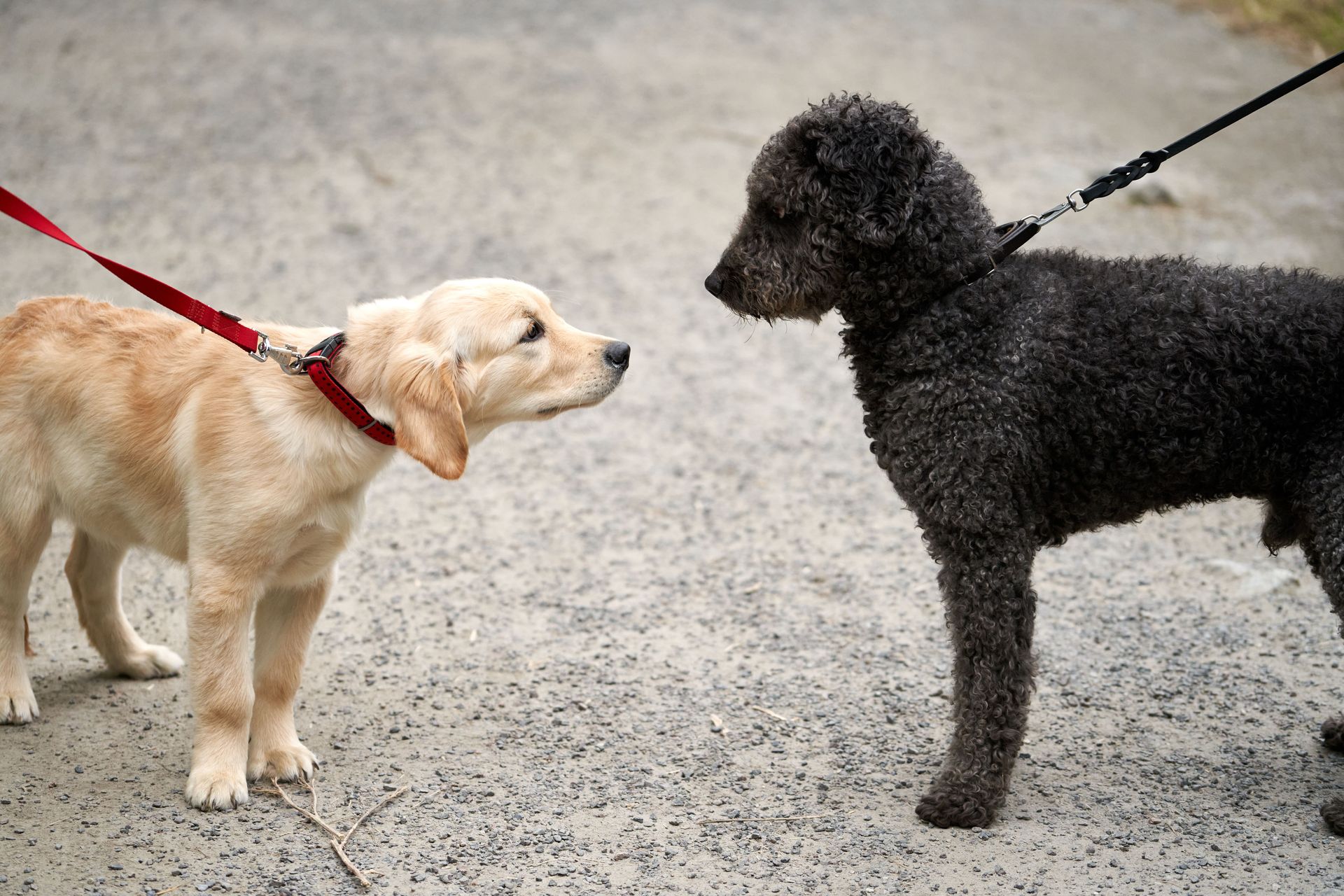
- Unfamiliar people, animals, or environments
- Stressful or overwhelming experiences
- Age-related changes in energy or confidence
- Physical discomfort or underlying health concerns
A dog who suddenly refuses to jump into the car, for example, might be experiencing discomfort rather than deliberately ignoring a command. Likewise, a dog who becomes unusually reactive during walks may be struggling with fear, frustration, or a new environmental trigger.
Sudden or unexplained behavioral changes should be evaluated by a veterinarian to rule out medical causes before assuming the issue is purely behavioral.
Pay Attention to the Patterns
Understanding when and where a behavior occurs can reveal valuable information.
Does your dog become uncomfortable only around unfamiliar dogs? Do they bark more frequently during certain times of day? Does the behavior appear after an especially busy or stimulating experience?
Observing these patterns helps identify possible triggers and makes it easier to develop an appropriate training approach.
It can also be helpful to pay attention to subtle signs such as changes in posture, excessive panting, avoidance, or difficulty settling.
Respond With Guidance, Not Frustration
When a dog's behavior changes, responding with frustration can make an already difficult situation worse. Instead, focus on creating manageable opportunities for success.
If your dog becomes uncomfortable in a particular environment, increasing distance from the trigger and gradually rebuilding positive experiences may be more productive than pushing them into the situation.
For dogs developing unwanted habits, reinforcing appropriate alternatives and maintaining predictable routines can help restore consistency.
Understanding Leads to Better Training
Every dog is an individual, and effective training should account for their personality, experiences, and current needs. Recognizing the reason behind a behavior allows owners and trainers to address the underlying issue rather than simply reacting to the symptoms.
At Destination Dog Training, our programs emphasize understanding each dog's unique challenges while helping owners develop the communication skills needed for long-term success.
The more you understand what your dog is communicating, the better equipped you'll be to guide them toward healthier habits and a stronger relationship.